Thursday, September 30, 2010

5 - Trevor C. : Guernica Imitation


Thoughts on the Walter Benjamin Article:

I agree with Benjamin that the historical context of a work of art can give it an aura that can't be reproduced. Even if I had the skill to recreate Picasso's Guernica exactly as it is, my painting wouldn't be the symbol of the destruction of war that Guernica is because the idea wasn't originally mine. Thus, what motivates or inspires the artist, in this case the bombing of Guernica and the suffering it caused innocent civilians, has a significant impact on how the work comes to be viewed by society.

I also feel that some parts of a painting just can't be replicated. To do my drawing, I looked through many photos. A friend who has seen Guernica in person was there with me and stated that none of the photos contained all of the details you can see in the original. Even photographs couldn't pick up all of the shapes contained in the painting's dark background.

Homework for Thursday: Theory of the Derive

http://library.nothingness.org/articles/all/en/display/314

http://en.wikipedia.org/wiki/Dérive
http://en.wikipedia.org/wiki/Situationist_International
http://en.wikipedia.org/wiki/Psychogeography

Tuesday, September 28, 2010

5: Brady C. Teton Mountains, Ansel Adams

I love the Grand Teton National Park, I have camped there and skied there a lot. I also am a big fan of Ansel Adams' photography, so this is a great combination of all of those.

Original:


Imitation:

[5] - RamyaM: Reproduction

Still-life with Quice, Cabbage, Melon and Cucumber - Juan Sanchez Cotan

6::Alexandra Schultz::Das Kunstwerk im Zeitalter seiner technischen Reproduzierbarkeit

Thoughts on the article:

The sections on art's origins in cult/ritual as an object of worship, and how reproducing it frees it from these origins got me thinking about how mechanical reproduction isn't a new phenomenon, and can in fact coexist with a religious purpose.  The Ancient Greeks made tons of cheap little clay reproductions of statues of gods and deities for people to carry around or keep in their houses, and in this case, the statues didn't lose their value as religious/cult icons.

My favorite part of the article, although I didn't necessarily agree with any of it, was section 11, where he continues to discuss film vs. other forms of art.  I found it a little offputting how he entertains a romantic notion of art sans mechanical involvement as more human or whole than art created with the aid of mechanical tools, which introduce temporal/spatial divides in the process of creation.  I would draw a distinction between the "finished product" and the "process of creating the product," two views of a piece of art that he did not distinguish.  He discusses how film presents such a convincing imitation of reality, when in fact the process of creating a film is as far from reality as possible (lighting, multiple takes of every scene, changing the camera angle, crew members standing by, etc).  However, I would mention that in the process of creating the play, the author rewrote it several times and the actors rehearsed scenes over and over -- even a few lines at a time, over a few weeks to a few months, and possibly in different practice spaces.  So are these really so different?  Even during the live performance of a play, you have a stage crew backstage, lighting, set changes, and so on to maintain the illusion of reality.  Is there such a sharp difference between mechanically reproducing a movie to be screened multiple times and a play that is performed every night for months?

P.S. Is it just me, or did anyone feel like Ian showing us that article was a dare?  I debated bringing in a photo of a piece of art, slapping it down on the table, and announcing "That's my mechanical translation, imitation, emulation. Yeah, what are you gonna do about it?"

Also, I was just talking about the Treachery of Images ("Ceci n'est pas une pipe") with someone, and it made me think about how none of us actually copied a piece of art (unless you were looking at the original).  We all copied mechanical reproductions of pieces of art. I hadn't really thought about that until now. WEIRD.

5 :: "Art in the Age of Mechanical Reproduction" Response :: Luke Kooper


I found the concept of aura interesting; how a painting has one while a photograph does not. But if I do not like a work of art, no matter who created it, someone else might see something else in it. You see, for me, art is all about originality, though I also agree with the saying “good artists copy, great artists steal.” I personally do not give myself credit for my “Translation, Imitation, Emulation” drawing, though that is because I think it lacks a sense of originality. But then again, how is it then different than a photograph? 

5::Alexandra Schultz::Albrecht Durer's mother

Here is a pic from last night (I've added more details since then).  The camera washed it out :<

4 :: Translation, Imitation, Emulation :: Luke Kooper


5 - Alisa C - Imitation

This is a Banana Republic ad I found in one of the fashion magazines at the RISD Library. 


four: isabella giancarlo : imitation

Rene Magritte, Les Amants, 1928
Isabella Giancarlo, The Lovers Study

comments on the walter benjamin piece:
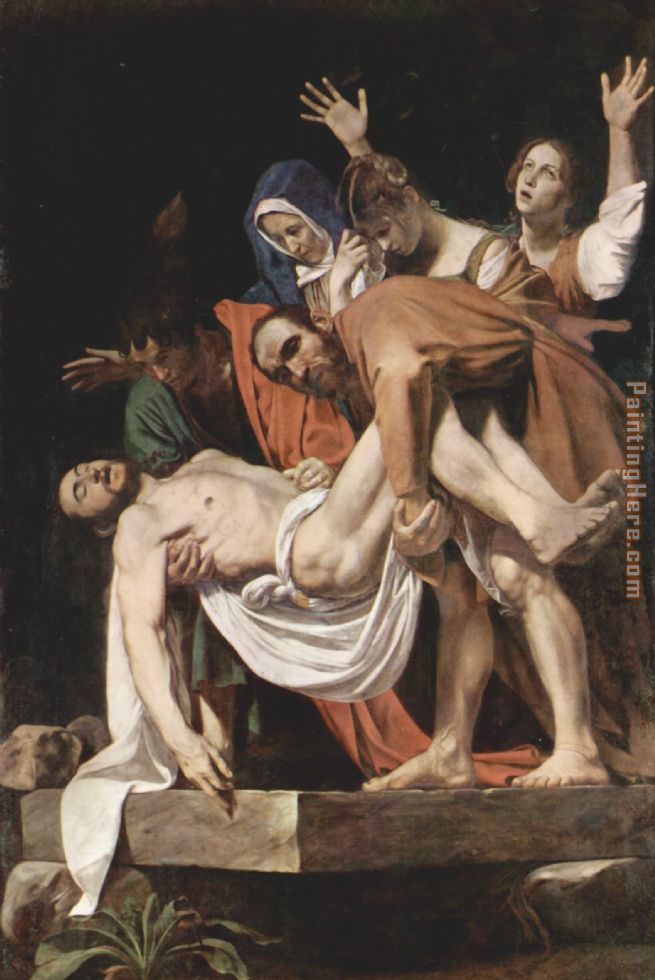
Caravaggio's Entombment of Christ
I agree with Benjamin's claim that something is lost when a piece of art is reproduced.  If I were to see Caravaggio's "Entombment of Christ" for the first time at a museum, I would be awestruck.  Seeing the tremendous size and detail up close would be incredible.  Caravaggio never intended for his work to be seen on a screen.  The drama of the piece is lost in an online image.   You can't feel as if you are in the tomb, seeing it online.  However, as a student of the arts, I would never say to burn art history textbooks and take all images off the Internet.  Reproduction of art brings it to a wider audience, however one must realize that there is a power in art when seeing an original in person.

4: Mia : Copy

5 - Kerry M - Imitation

D. Fried: Imitiation


I tried to be as true to the piece as I could in a different medium.

Sophia W. Imitation: Portrait of Edward VI as A Child

I chose to copy Hans Holbein the Younger's "Portrait of Edward VI as A Child". I did not copy down the Latin poem beneath Edward VI, but just put down what the poem means.

Copy- Christine C


I chose a painting called "Independence" by an American painter, Frank Blackwell Mayer
I opted not to use the grid.I underestimated the time colored pencil would take, and the drawing is not complete, however I do plan on finishing it. I purposely left out the hat under the bench because I had no idea it was a hat until three days into the drawing.

Monday, September 27, 2010

[5] - Mary F: Imitation

My imitation of this artwork reflects my own interpretation and is, in a sense, from an original point of view. Because of today's technological advancements and ability to recreate art easily with the click of the mouse, this does not mean that art doesn't retain its authorship. Most of the reproduced art is credited but even if it is not, the author remains "alive" and manifested in the artwork itself. Art that is copied and changed, copied and reinterpreted creates a certain aura that is unique: the new person taking on the task of reproducing the art adds a bit of himself to the work of art and creates, in a sense, a fusion of new and old.

I reproduced this piece of art and changed the color of the dress to red. I wanted to stick to a primary color and I felt red would pop out more. Also, I tilted the art in landscape format, rather than portrait. And I did not draw in the face.

5 - Emily Gilbert: Imitation


[4] Tom Nguyen - Imitation


Sublime Arrows
Yves Hersant

5 - Lydia Yamaguchi - Translation, Imitation, Emulation

The original scan. It is a picture of a sculpture of Tutankhamen from the RISD library.

What I worked off of (with grid lines)

My drawing. I tried to make a fairly literal copy of the picture for practice.

Monday, September 20, 2010

Walter Benjamin: Art in the Age of Mechanical Reproduction

Please read this before Thursday:

http://www.marxists.org/reference/subject/philosophy/works/ge/benjamin.htm

Thursday, September 16, 2010

Final T-Shirt Christine C


Finalized Shirt Design. I played around with the facial expression of the sun a lot, but kept coming back to this design. I wanted it the image to appear as the actual brown logo at first sight, so that the bad ass-ness of Brown is clearly an inherent part of the university. Rather than overdo the front of the shirt, I opted instead to add a small detail to the back.

4::Alexandra Schultz::Final Teashirt


For my tshirt, I first changed the tshirt template to one with a thinner outline to reflect what it would actually look like in real life on a person. Ramya gave me the awesome suggestion to make the bottom of the tshirt curved (thanks Ramya!!), which got me thinking about how I didn't have to use the template as I found it.  I ended up widening the sleeves so that the top of the teacup would hit the armpits (that sounded more attractive in my head) and making the bottom curved with a thick black seam along the bottom.  I also thinned out the lines of the teacup and the steam lines coming off the top, and made the steam lines slightly asymmetric.  I experimented a lot with the height of the tea cup, since I want the teacup shirt to focus on the top half, while the teapot shirt focuses on the top half. I spent so much time on this tshirt that I didn't get to polish the teapot one as much as I would like, so I'm going to keep working on it til I get it right!

Jacob S.

4: Brady C. T-Shirt

I made 2 and couldn't decide between them so here they both are-

summer. :


lion (front and back):


4-lydia y - tshirt final (#2)


The idea is that this is a tshirt, but not just an ordinary tshirt. This shirt is for sharing. You can write on the tshirt and then fold it up on itself and send it as a letter/package. The shirt, letter, and envelope are all one.


Final T-Shirt Design

For my final t-shirt design, I played with making the colors a little bit more subdued as well as adding a zipper coming down from the hood to try and draw some continuity between different aspects of the design.

4 : Katherine : Final Design

Some color tweaks to make the pattern a little more subdued.


4 - Emily Gilbert: Final Shirt Design

4 :: Final T-Shirt Design :: Luke Kooper

4- Dan M: final T shirt

4 - Kerry M - tShirt

In my final version, the figure becomes even more of a shadow, imprisoned behind the tshirt, through which she conforms to society.

Wednesday, September 15, 2010

3 - Alisa C - Final Tshirt Design

It's funny (but not surprising) how most of the people I meet don't know where Mauritius is. Would this be an alternative to my countless "it's a really small island off the cost of Madagascar"s?

Front:
Back:

[4] - Mary F: Final "Tshirt" Design(s)


I took the original two designs I had and made them into templates for other objects and tweeted around this idea. I played around with the idea that own Tshirt design(s) can be used on any merchandise, almost.
Stamp
credit card

Original
original

hair clip
hair bands